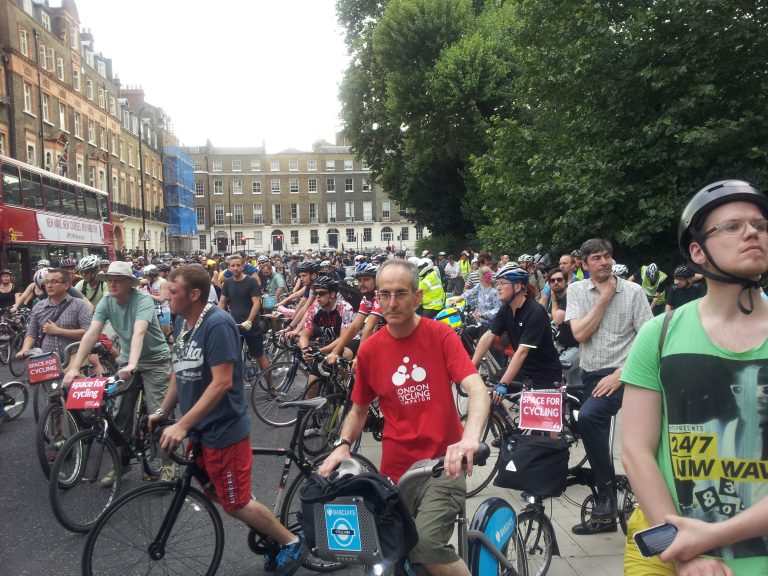
Despite parkrun’s efforts to make clear it doesn’t matter if you walk, run or skip to the finish, there’s a lingering mentality that walking at parkrun is somehow inferior to running. For many people, their goal is to run the whole 5k without stopping. Anything less and they feel like they’ve failed or they’re going to be branded a cheat.
But for many people running continuously feels either unachievable or just plain miserable. It’s not surprising week 5 of the Couch to 5K programme is reputed to be one of the toughest weeks to get through. That’s the week where the non-stop runs progress from a manageable 5 minutes to a daunting 20 minutes.
Yet we continue to pressure ourselves to run continuously, despite the aches and pains, and despite the fact it may even slow us down!
Why do we beat ourselves up for walking at parkrun?
For some unknown reason, it has become ingrained in the running community that “walking is cheating”. We feel we’re lesser beings if we have to stop and walk during a parkrun. We beat ourselves up for not being fit enough, not being strong enough, not having enough willpower.
This of course is all total rubbish.
Part of this could be down to programmes such as Couch to 5K, which – whilst brilliant in many ways – defines “success” as being able to run continuously. And with that, comes the idea that once you’ve succeeded in running 5k walking is no longer allowed.
Or it might be an ego thing. We worry what others will think of us if we’re walking at parkrun. Or feel like we’re going to stand out amongst a crowd of runners, where the social norm is to keep going whatever.
But there is another way. Make walking work for you by using the Jeff Galloway run-walk-run method (or “Jeffing” as it’s commonly known).
What is Jeffing?
The Jeff Galloway method is an approach to running that alternates short runs (from 10 seconds up to several minutes) with short walk breaks (<30 seconds).
Ahh, so it’s like Couch to 5K?
Well, kind of.
There are similarities between Jeffing and the first few weeks of the Couch to 5K programme. But there are also some key differences:
1. Jeffing is a method of running in itself. Unlike Couch to 5K, the intention is not to build up to longer running intervals, or to run continuously. Jeffers purposely keep their intervals short, whether they are running 5K, 10K or a marathon.
2. Jeffing is for everyone, regardless of whether you can run continuously. Jeffers choose to incorporate walk breaks because they know it makes running more achievable, more enjoyable and more sustainable for them.
3. Jeff Galloway recommends walk breaks are 30 seconds or less. Long enough to recover, but short enough to keep momentum.
Read more about Jeffing and how it will help your parkrun motivation.
How the Jeff Galloway method changed my mindset
The misplaced idea that running continuously is somehow superior to Jeffing is widespread in the running community, and admittedly one that until last year I succumbed to.
I’ve ran on and off since I was a teenager, and been doing parkrun since 2013. For me, running has always been continuous. If I ever saw anything about the run-walk-run method, I assumed it was for people who couldn’t run the whole distance. If I ever allowed myself to walk in races, it was only for 100 yards at each drink stop (even this felt like I’d cheated). In fact, I used to be so worried about stopping that I’d jog on the spot if I had to wait at a traffic light!
If even I can get over the idea that walking is cheating, so can you.
Jeffing the London Marathon
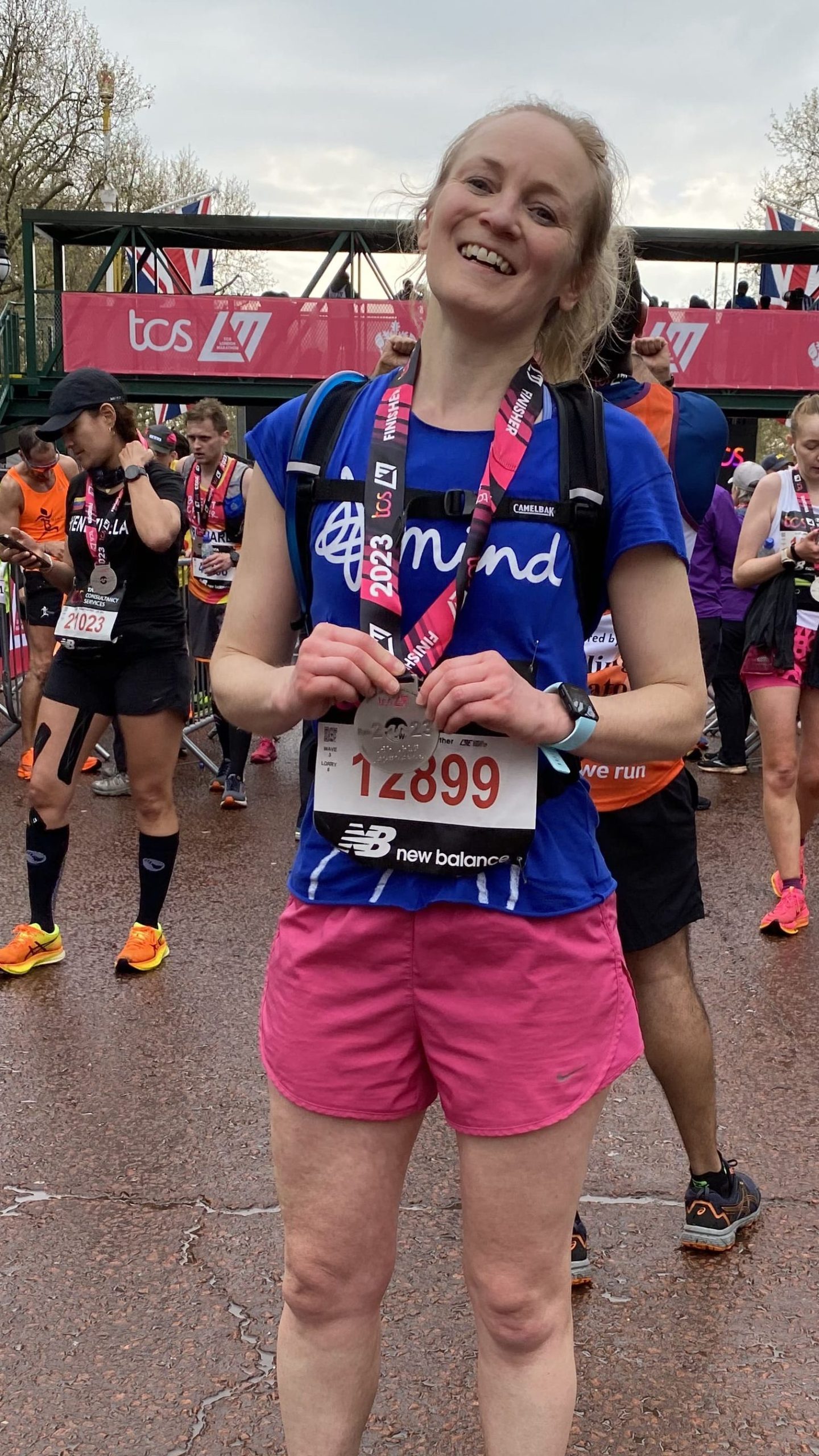
The change came for me when I picked up an over-use injury several weeks before the 2023 London Marathon. I’d trained so hard and raised over £2000 for Mind charity, so I was determined to complete the course. But I knew I had to reframe my thinking and say goodbye to the times I’d been hoping for.
I came up with what I thought was the novel idea of running a mile then walking a mile. After some Googling I soon realized this wasn’t such a novel idea after all and I discovered the Jeff Galloway run-walk-run method. Someone signposted me to the “Girls That Jeff” (currently 31.6k members) and “Just Jeffing It” Facebook groups (currently 7.9k members), and there was no turning back. The inspiration, support, and advice in those groups is second to none.
Jeffing became a new challenge for me and my excitement for the marathon started to build. A few weeks later, I crossed the finish line in 4:35:16, after Jeffing a 90/30 ratio (90 seconds run, 30 seconds walk) throughout. And that included two toilet stops!
Can’t say it wasn’t tough in those last few miles, but it was one of the best experiences of my life, and I couldn’t stop smiling.
Crossing that finish line was a strange mixture of elation and relief. But I know one thing – I had earned that medal and I definitely didn’t feel like I’d cheated.
How do I get over the idea that walking at parkrun is cheating?
Since Jeffing the London Marathon, I’ve become a bit of a Jeffing geek. I regularly incorporate run-walk-run into my training. I’ve Jeffed many parkruns, a 10K and a half-marathon. I’ve seen Jeffing change the parkrun experience of many of my (initially skeptical) friends.
If you’re tempted by Jeffing, but struggling to overcome the mental block that “walking is cheating”, here’s some ideas to consider:
Tips from those with experience
Paul Sinton-Hewitt, inspirational founder of parkrun, makes clear that parkrun is about walking, volunteering and community as much as it is about running. And if you get from start to finish with your own horsepower, what does it matter whether you walk, run, skip or jump? Can you say you’ve “run” parkrun if you’ve Jeffed it? Of course!! Jeffers are runners too.
If you find it difficult to run the whole 5k without stopping, why not integrate walks from the start rather than wait until you’re worn out? This powerful feeling that you’re walking through choice rather than necessity is a game-changer (as Mary Jennings notes, you only have to look at someone’s body language to tell the difference).
For many people, the main challenge of Jeffing isn’t physical. It’s the psychological challenge of stopping to walk early on in a run, when you feel fine to continue running. Yet paradoxically, starting too fast is also one of the main mistakes people make at parkrun. Jeffing is a great way to make sure you don’t wear yourself out too quickly. And I promise you – that little bit of discipline will pay off in the later stages of the run.
Changing your mindset
If you’re worried about what others think, they’re probably too busy worrying about themselves to judge you. And when you overtake them later on (which you will), they’ll only be looking on with inspiration. They may even ask what you’re doing and give you an opportunity to spread the Jeffing magic further!
Think about other physical activities you do – it’s likely all of them include some kind of a break to recover in between sets, lengths, halves, matches etc. Why should running be any different?
The only way to really believe the benefits of Jeffing is to try it out. Why not challenge yourself to Jeff your next parkrun? Best case scenario – you beat your usual times, enjoy the run, and discover a new option for running. Worst case scenario – it doesn’t work for you and you go back to continuous running.
And perhaps the most important thing to remember. Whether you walk, run or Jeff parkrun, the real achievement is stepping out that front door in the first place. Whatever your time, and however you get to the finish, you’ve achieved far more than if you’d stayed in bed.
Still not convinced? Read what others who’ve Jeffed parkrun think of it.
If you’re local to Princes parkrun and would like to try out Jeffing, please come and chat with me or drop me an e-mail at paula@madeuptomove.co.uk
For further information about Jeffing, check out the Jeff Galloway website, as well as Facebook groups Just Jeffing It and Girls That Jeff.
Comments
Please comment below to share your experiences or ask any questions you have about Jeffing or parkrun.
————————————
Dr Paula Watson is a HCPC-registered Sport and Exercise Psychologist and Director of Made Up to Move Ltd.
Paula offers psychological therapy (1-to-1 or couples) to help people with weight loss, disordered eating and exercise problems. If you’d like support in changing your relationship with movement or eating, please find details of 1-to-1 support here.